


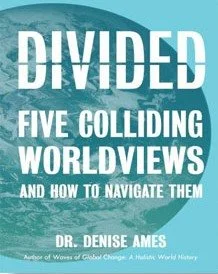
Divided:
Five Colliding Worldviews
and How to Navigate Them
Why can’t we get along?
Divided examines our nation’s deep cultural divides through the lens of five competing worldviews—Indigenous, Traditional, Progressive, Globalized, and Transformative. This framework helps explain why we see the world so differently and points toward practical ways to bridge our differences.
$14.95, 258 pgs.
When we make an effort to understand one another, we are less likely to be divided as a country.
Divided addresses a question on the minds of many Americans: Why can’t we get along? As cultural polarization deepens, it threatens democratic norms and undermines social cohesion. Divided examines this growing rift through the lens of five competing worldviews—Indigenous, Traditional, Progressive, Globalized, and Transformative. By exploring the values and assumptions that shape each perspective, the book offers a framework for understanding our differences and navigating an increasingly divided society.
Bridging our cultural divide is one of the most urgent challenges of our time—but bridging it begins with understanding it. By exploring the five worldviews presented in Divided, readers gain a framework for making sense of our differences and engaging in more thoughtful, productive conversations. Without such understanding, polarization and conflict are likely to deepen.
Divided presents these worldviews in a clear and personal way, offering a guide to perspectives that may differ from our own. By moving beyond judgment and toward understanding, readers can better appreciate what motivates others and discover common ground. When empathy and understanding grow, solutions become possible—solutions that serve the common good rather than the interests of any single group.

Dr. Ames is deeply committed to sharing her work with others through workshops, classes, and community presentations. In her experience, many people have become entrenched in cultural “bubbles,” often convinced of their own moral certainty while viewing those with different perspectives as misguided or wrong. She believes that meaningful reconciliation begins with self-reflection—examining our own assumptions, values, and biases before attempting to understand others.
Through her teaching and writing, Dr. Ames demonstrates that understanding the cultural divide is a critical first step toward healing. By fostering greater self-awareness, empathy, and curiosity about differing perspectives, individuals and communities can begin to bridge divides and build more constructive relationships.
Divided: Colliding Worldviews Chapter Summaries
-
1. Why Are We Divided?
This introductory chapter asks a central question: Why can’t we get along? The long-standing national narrative of the American Dream is fraying and no longer resonates with many people’s hopes and aspirations. The author introduces two conflicting national narratives contributing to the divide: the Liberal Narrative and the Conservative Narrative. After outlining the purpose of the book and her intentions in writing it, she encourages readers to move beyond the “judging game,” in which one’s own group is seen as morally superior to others. The chapter concludes with an overview of ten reasons why the cultural divide in the United States has developed and continues to widen.
Students in China, photo Denise Ames
-
2. Worldviews: Our Window to the World
This chapter introduces the concept of worldviews, defining them as the lenses through which people interpret and navigate the world. Worldviews consist of interconnected beliefs and assumptions that profoundly influence how individuals think, feel, and act. The author presents the five worldviews explored throughout the book and examines the phenomenon of populism on both the left and right. The chapter also discusses how worldviews develop and change over time and highlights the common patterns shared across all worldviews. It concludes by exploring the bound assumptions within each worldview: the underlying beliefs that are often accepted without question and shape how people understand reality.
Children in Finland, photo Denise Ames
-
3. The Modern Worldview
For over 500 years, the Modern worldview has played a dominant role in shaping the world. Although it remains influential, its position is being challenged by alternatives. With the exception of the Indigenous worldview, the other worldviews—Traditionalist, Progressive, Globalized, and Transformative—have either grown out of or reacted against the Modern worldview. The Modern worldview has influenced thought, economics, politics, society, and the natural world. “WEIRD”—Western, Educated, Industrialized (or Individualized), Rich, and Democratic—is a framework that helps explain many of the assumptions common in modern societies. The theme of “WEIRDness” is introduced here and revisited in later chapters.
Women Weaving in Bahrain, photo Denise Ames
-
4. The Indigenous Worldview
This chapter examines how the Indigenous worldview differs fundamentally from the Modern worldview. Indigenous peoples are culturally distinct groups with deep historical ties to the lands their ancestors have inhabited for generations. Although they represent only about six percent of the global population, Indigenous communities have pioneered ways of understanding human relationships, society, the economy, spirituality, psychology, and the natural world. Through stories such as the “Story of a Mexican Fisherman” and the life of Nobel Peace Prize recipient Rigoberta Menchú, readers gain a deeper understanding of the values, challenges, and strengths of the Indigenous worldview in the context of a modernizing world.
Mayan ruins in Belize,photo Denise Ames
-
5. The Traditionalist Worldview
The author, in this chapter, divides the Traditionalist worldview into four groups: traditional political conservatives, the populist right, the alt-right, and religious fundamentalists or evangelicals. Traditionalists generally seek to preserve established values, customs, and institutions, favoring stability and gradual change over rapid transformation. The chapter discusses the rise of the populist right, including the political forces that contributed to the election of Donald Trump in 2016. It focuses primarily on Christian fundamentalism, the largest group within the Traditionalist worldview, while also examining Muslim and Jewish fundamentalism to show that fundamentalism is a global phenomenon found across religious traditions.
Check point, Berlin, Germany, photo Denise Ames

-
6. The Progressive Worldview
The Progressive worldview emerging during the early 20th century, intensified in the 1960s, and has gained even more steam since the mid-2010s. It is not a single, unified perspective, but rather a collection of competing factions that each seek greater influence, including moderate or classical liberals, the populist or progressive left, and the more radical Antifa left. The chapter examines the influence of postmodern thought on the development of the Progressive movement and offers a brief historical overview of its evolution. It concludes by analyzing the contemporary state of the movement, including reasons it has continued to shift further left in recent years.
Mosque in Iran, photo Denise Ames
-
7. The Globalized Worldview
Sweeping across the globe, the Globalized worldview has profoundly reshaped how people work, play, interact, and live their daily lives. Accelerating since the 1980s, it reflects the increasing interconnectedness of people through the movement of goods, services, capital, labor, technology, ideas, information, and migration. Globalization is a complex, multidimensional phenomenon that links economic, political, cultural, social, environmental, and technological forces across national borders. In many ways, it has created a single global frame of reference, shaping how billions of people experience and navigate everyday life. This chapter explores globalization’s impact on the economy, society, politics, and culture.
Village in France, photo Denise Ames
-
8. The Transformative Worldview
At this moment in history, people around the world are calling for a different worldview—one that can help ensure the continuity of human life and the preservation of the Earth. Supporters envision multiple possible futures and believe that meaningful alternatives are both possible and achievable. This perspective challenges cultural uniformity, rigid fundamentalism, corporate dominance, consumer-driven values, extreme individualism, concentrated wealth and power, political gridlock, unchecked technological or economic “progress,” and environmental degradation. These perspectives are often united by shared democratic values, renewed spiritual connections, and a commitment to compassionate, pragmatic solutions .
Lebanon/Israel border, photo Denise Ames
-
9. Five Worldviews & Six Moral Foundations
This chapter integrates the Five Worldviews framework with Jonathan Haidt’s Moral Foundations Theory to provide deeper insight into the cultural divide. Haidt’s six moral foundations—care, fairness, liberty, loyalty, sanctity, and authority—are introduced and explained, with reference to the work of Émile Durkheim and John Stuart Mill to help contextualize contemporary social divisions. The author argues, in alignment with Haidt, that the human mind is not a blank slate and that evolutionary psychology plays an important role in shaping human behavior. Much of human judgment, she suggests, is guided less by deliberate rational analysis than by instinct and intuition.
Bazaar in Shiraz, Iran, photo Denise Ames
-
Chapter 10. Bridging and Healing the Cultural Divide
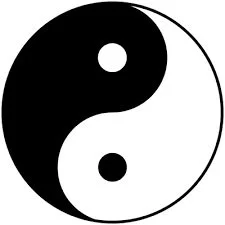
We are living in a vulnerable moment in our nation’s history, marked by rapid change that leaves many people feeling uncertain and disheartened. This chapter offers practical tips and proven practices that the author and others have used to help bridge the cultural divide. It highlights how black-and-white thinking, assumptions of moral superiority, and strident demands for action can become corrosive forces that shut down conversation and make compromise more difficult, especially in times of adversity. The chapter concludes by outlining pathways toward healing the divide through nonjudgmental engagement, recognition of our shared humanity, and reflection on our broader place in the world. It also suggests that incorporating the Chinese symbol of yin and yang into our thinking can offer a more balanced and mature framework for engaging cultural differences and supporting deeper understanding and reconciliation.